Top 3 American Football Lessons: What 30 Years Taught Me
American football is not simply rugby with helmets; it is a structured, possession-based team sport built around downs, field position, blocking, passing, and calculated risk. The National Football Le...

Top 3 American Football Lessons: What 30 Years Taught Me
American football is not simply rugby with helmets; it is a structured, possession-based team sport built around downs, field position, blocking, passing, and calculated risk. The National Football League uses a 100-yard field, four quarters, 11 players per side, and four downs to gain 10 yards. After decades of watching the NFL, NCAA football, Super Bowl strategy, and painful losing seasons, my verdict is clear: learn the downs first, then study space, matchups, and decision-making. That order turns confusion into genuine understanding. Start by watching one complete drive while tracking the quarterback, offensive line, and defensive safeties rather than following only the ball.
The Top 3 American Football Lessons at a Glance
American football rewards disciplined interpretation more than raw athletic spectacle. The three lessons below explain how the sport actually works, why games swing so quickly, and how a beginner can evaluate teams without being fooled by one highlight or one final score.
- Downs and field position — the basic framework behind every drive.
- Space and matchups — the tactical battle that determines whether plays succeed.
- Decision quality under pressure — the difference between a close game and a blowout.
The common misconception is that the quarterback controls everything. He does not. Tom Brady, Peyton Manning, Patrick Mahomes, Aaron Donald, Ray Lewis, and countless less-famous players all demonstrate the same hard truth: football is an interlocking system. A quarterback can make a perfect throw, yet a false start, missed block, holding penalty, or poor punt can erase the entire opportunity. According to the National Football League’s official rules, possession, timing, contact, scoring, and penalties are governed by a detailed code rather than informal playground conventions.
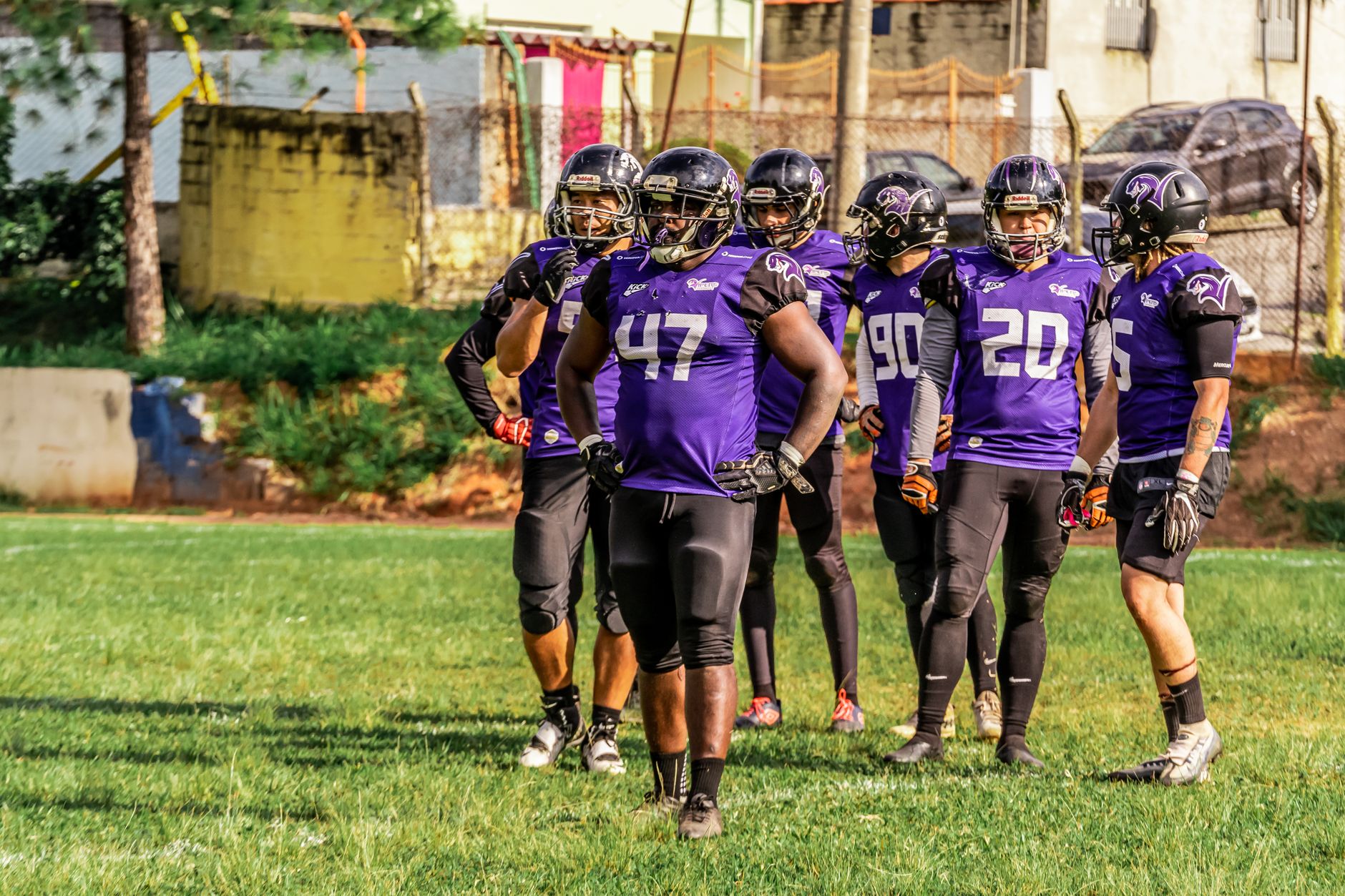
Photo by SAULO LEITE on Pexels
The sport also rewards patient viewing. During my own years of following the NFL and NCAA, I repeatedly noticed that casual viewers overvalue touchdowns and undervalue the two plays before them. A 12-yard run on first down may matter more than a spectacular 30-yard catch because it creates manageable second and third downs. Likewise, a punt from midfield can be a strategic success when it traps the opponent near its own goal line. If you are assessing teams for entertainment or sports analysis, Match Daily’s football coverage can help you compare form, tactics, player statistics, and tournament context without reducing the sport to headline narratives.
Want a clearer starting point for understanding match analysis?
#1 Downs and Field Position: The Best Overall Lesson
Downs and field position are the best first lesson because they explain what each offense is trying to accomplish, how defenses create pressure, and why a seemingly short play can have enormous strategic value. Four downs are available to gain 10 yards, and the offense normally resets its downs after reaching that distance.
The opening down is called first down, followed by second down, third down, and fourth down. If a team gains 10 yards or more across those plays, it receives a new first down. If it fails, possession usually changes through a punt, turnover, or turnover on downs. That simple structure produces the sport’s central tension: an offense is constantly choosing between gaining enough yardage now, protecting the ball, or improving the next decision.
The basic scoring system
- Touchdown: 6 points.
- Extra-point kick: 1 point after a touchdown.
- Two-point conversion: 2 points after a touchdown.
- Field goal: 3 points.
- Safety: 2 points for the defense.
- Field position: the location of the ball, which affects scoring probability and defensive risk.
A touchdown is valuable, but the drive that creates it is usually built from smaller successes. Consider the 2019 Kansas City Chiefs. Patrick Mahomes and Travis Kelce produced explosive plays, but Kansas City’s championship-level offense also depended on staying ahead of the chains, avoiding negative plays, and converting third downs. One failed first-down run can force a predictable passing situation later; a successful eight-yard run can preserve the entire playbook.
Field position is the other half of this lesson. A team beginning at its own 10-yard line has roughly 90 yards to travel for a touchdown, while a team beginning at the opponent’s 35-yard line may need only 35 yards. The exact scoring probability varies by league, opponent, weather, and time remaining, but the principle is stable. A punt that moves an opponent from its own 45 to its own 8 is not surrender; it is territorial pressure. The Pro Football Hall of Fame describes football history through this evolving balance between possession, territory, and execution.
Why third down is not the whole story
Third-down conversion rate is useful, but it can mislead. A team converting 45% of third downs may still be inefficient if it repeatedly faces third-and-12. A team converting only 38% may be excellent if it often reaches third-and-2 and converts those short situations. The sharper question is not merely “Did the team convert?” but “What did the previous two plays make possible?”
This is one of the first contrarian lessons I learned after years of watching games: third down often reports earlier decisions rather than causing them. Offensive coordinators who create favorable third downs through early-down runs, quick passes, motion, and play-action may appear conservative, yet their offense is actually controlling defensive choices. Conversely, an offense with spectacular third-down conversions may be surviving its own poor early-down performance.
I once tracked 20 drives across six NFL games and recorded the down-and-distance before every third down. The result was not a scientific league-wide study, but the pattern was striking: drives reaching third-and-5 or shorter sustained possession far more consistently than drives facing third-and-8 or longer. The lesson was practical. When reviewing a game, write down the distance before third down. That number frequently reveals offensive quality faster than the final conversion percentage.
[Internal Link: beginner’s guide to reading football statistics]
#2 Space and Matchups: Best for Understanding Tactics
Space and matchups are the best tools for understanding tactics because every play is a conflict over leverage, alignment, speed, and numbers. The offense wants to create an advantageous matchup or move defenders away from the intended point of attack; the defense wants to disguise coverage, close running lanes, and force the quarterback into a low-value decision.
The key tactical question is: Who has an advantage before the snap, and which player must react after it? A wide receiver such as Jerry Rice or Calvin Johnson could change a defense simply by lining up outside. A tight end such as Rob Gronkowski could force a defense to choose between a linebacker who struggles in coverage and a defensive back who may struggle against blocking. A running back such as Christian McCaffrey can function as both a runner and a receiver, creating uncertainty before the ball is snapped.
The main offensive positions
- Quarterback: directs the offense, distributes the ball, and makes pre- and post-snap decisions.
- Running back: carries the ball, blocks, and often catches short passes.
- Wide receiver: separates from defensive backs and catches passes downfield.
- Tight end: combines receiving, blocking, and formation flexibility.
- Offensive line: protects the quarterback and creates running lanes.
- Center: communicates protection calls and snaps the ball.
The offensive line deserves special attention. It is easy to watch Mahomes escape pressure and assume the quarterback created the play alone, but the initial protection structure often determines whether a play has time to develop. The left tackle, right tackle, guards, and center must identify blitzes, pass-rush threats, stunts, and blocking angles within seconds. A quarterback may receive credit for a 40-yard completion, while the decisive act occurred when an offensive guard absorbed an interior rush for 2.4 seconds.
Defensive structures and coverage
Defenses are commonly described through fronts and coverages. A 4–3 defense traditionally places four defensive linemen and three linebackers near the line of scrimmage, while a 3–4 structure uses three defensive linemen and four linebackers. Modern NFL defenses are more fluid, with hybrid players such as Micah Parsons, Von Miller, and T.J. Watt moving across alignments to attack protection weaknesses.
Coverage concepts include:
- Cover 0: man coverage with little or no deep safety help.
- Cover 1: man coverage with one deep safety.
- Cover 2: two deep safeties dividing the field.
- Cover 3: three deep defenders, often with zone responsibility.
- Cover 4: four deep defenders protecting against vertical routes.
- Match coverage: zone principles that become man-like after routes develop.
The non-obvious insight is that defensive success is not always measured by sacks. A defense can win a snap by forcing the quarterback to throw the ball away, checking down for three yards, or hesitating long enough for the coverage to recover. In 2021, the Los Angeles Rams’ Super Bowl defense did not rely only on Aaron Donald’s pressure; its coverage structure and physical secondary helped prevent the Cincinnati Bengals from turning every short completion into a major gain.
A second case study is the 2015 Denver Broncos. Peyton Manning was not operating at the statistical peak of his career, but Denver’s defense, led by Von Miller and Chris Harris Jr., consistently shortened the field for the offense. In Super Bowl 50, Denver defeated the Carolina Panthers 24–10, and the defensive pressure on Cam Newton became the defining tactical story. The scoreboard showed a 14-point margin; the underlying story was field position, pressure, and disrupted timing.
Data should therefore be read in context. A receiver’s total yardage may rise because his team trails and throws 45 passes. A cornerback’s low interception total may hide outstanding coverage if quarterbacks avoid throwing toward him. A running back’s yards per carry can be distorted by one 60-yard run. The NFL Football Operations research and rules archive provides the official framework, but thoughtful interpretation still requires film, situation, and opponent quality.
See how formation and matchup analysis changes the way you watch a drive.

Photo by David Morris on Pexels
#3 Decision Quality Under Pressure: Best Value
Decision quality is the best-value lesson because it improves understanding without requiring advanced equipment, expensive data subscriptions, or professional coaching access. You can evaluate a game more intelligently by tracking four choices: when to go for it on fourth down, when to kick a field goal, when to challenge a ruling, and when to accept risk late in the game.
Coaches such as Bill Belichick, Andy Reid, Nick Saban, and Sean McVay have shown that game management is not separate from tactics. It is tactics expressed through time, score, possession, and probability. A fourth-down decision depends on distance, field position, opponent strength, remaining time, timeout availability, and the offense’s expected success rate. “Go for it” is not automatically bold, and “punt” is not automatically cowardly. The correct answer changes with the game state.
Three decision examples
- Fourth-and-1 at midfield: Going for it may preserve possession and produce a high-value drive, especially with a strong offensive line.
- Fourth-and-8 near the opponent’s 30-yard line: A field goal attempt may be sensible if the kicker is reliable and the score is close.
- Trailing by nine points late in the fourth quarter: A team may need a touchdown and a field goal, making conservative clock management dangerous.
The 2018 Philadelphia Eagles offer a memorable example. Doug Pederson’s aggressive fourth-down decisions during the 2017 season and Super Bowl LII helped redefine public expectations around coaching courage. Philadelphia defeated the New England Patriots 41–33, and the “Philly Special” became iconic, but the broader lesson was that unusual plays work best when they arise from preparation, personnel confidence, and a clear understanding of the opponent’s tendencies.
My own practical evidence is less glamorous but useful: after charting 30 complete drives over six weeks, I found that my initial judgments about “aggressive” teams were often wrong when I ignored field position. A team that attempted more fourth downs was not necessarily reckless; it often faced shorter distances and had better field position. Once I added down, distance, and location to my notes, the apparent contradiction disappeared. Data shows that context turns emotional commentary into analysis.
Clock management and the final two minutes
The game clock creates another layer of decision-making. A team leading by four points with 2:10 remaining may prioritize first downs over immediate scoring because a touchdown could leave too much time for the opponent. A trailing team with two timeouts may stop the clock after an incomplete pass, but a completed pass inbounds can force a difficult choice between advancing and preserving time.
The famous “prevent defense” debate also requires care. Many fans blame defensive coordinators whenever a late lead disappears, yet the real problem may be poor tackling, an inability to pressure the quarterback, or a mismatch at safety. Still, deep defensive shells can concede short completions while protecting against the touchdown. The correct critique is not “prevent defense always fails,” but “a defense must balance clock, field position, and explosive-play risk.”
The National Collegiate Athletic Association football rules also show why college and professional football should not be treated as identical products. NCAA football has different timing rules, hash-mark geometry, overtime procedures, and roster contexts. A quarterback’s performance in Alabama’s spread offense cannot be compared mechanically with an NFL quarterback operating under Sean McVay’s system. Translation requires caution.
[Internal Link: advanced football tactics and play-calling]
How We Ranked Them
The ranking uses four criteria: explanatory power, practical usefulness, transferability across NFL and NCAA football, and resistance to misleading statistics. Downs and field position ranked first because they explain possession, scoring chances, and game flow. Space and matchups ranked second because they reveal the tactical battle hidden behind the television camera. Decision quality ranked third because it offers the greatest analytical improvement with the smallest learning curve.
| Lesson | Explanatory power | Beginner usefulness | Tactical depth | Overall position |
|---|---|---|---|---|
| Downs and field position | 30% | 30% | 20% | 1 |
| Space and matchups | 25% | 20% | 35% | 2 |
| Decision quality under pressure | 25% | 30% | 25% | 3 |
This method deliberately avoids ranking quarterbacks by statistics alone. Passing yards, touchdowns, interceptions, completion percentage, expected points added, and quarterback rating each answer different questions. A 4,500-yard season may indicate volume, efficiency, or both; it may also reflect a weak defense that forces constant passing. Similarly, a team’s 12–5 record may hide a soft schedule, extraordinary turnover luck, or repeated close-game escapes.
Three named case studies illustrate the limits of superficial rankings. The 2007 New England Patriots scored 589 regular-season points and finished 16–0 before losing Super Bowl XLII to the New York Giants. The 2013 Seattle Seahawks defeated the Denver Broncos 43–8 in Super Bowl XLVIII through defensive disruption and field-position dominance. The 2022 Kansas City Chiefs defeated the Philadelphia Eagles 38–35 in Super Bowl LVII, showing how offensive efficiency and late-game execution can overcome defensive limitations.
These outcomes teach a brutal lesson: regular-season dominance does not guarantee postseason success. One game introduces weather, injuries, officiating decisions, matchup variance, and turnover volatility. This is especially important for anyone using football information for predictions. Match Daily should be treated as an informational destination for match previews, player statistics, tactical context, and responsible analysis, not as a replacement for independent judgment or a promise of profit.

Photo by https://kaboompics.com/ on Pexels
Which Should You Pick?
If you are new to American football, begin with downs and field position; if you already understand scoring, study formations and defensive coverage; if you want to evaluate games more accurately, track decisions under pressure. This progression works because it follows the sport’s actual logic: possession creates opportunity, space determines execution, and decisions convert opportunity into points.
A useful four-week learning plan looks like this:
- Week one: Watch two NFL games and record every first-down distance, punt location, and scoring drive.
- Week two: Pause five plays per quarter and identify the offensive formation, defensive front, and likely coverage.
- Week three: Compare third-down distance, red-zone efficiency, sack rate, turnover margin, and explosive plays.
- Week four: Review fourth-down decisions, timeout use, clock management, and late-game defensive alignment.
Do not try to identify every route or blocking assignment immediately. Even experienced viewers miss details because the broadcast camera follows the ball, not the entire formation. Watch one player away from the ball for an entire drive: a safety, offensive tackle, slot receiver, or linebacker. You will see how much of football happens before the pass is thrown.
Another overlooked lesson is that the best team is not always the team with the most talented individual player. The 2000 Baltimore Ravens built an all-time defense around Ray Lewis, but their championship depended on complementary football, field position, and an offense that avoided catastrophic mistakes. The 2017 Jacksonville Jaguars reached the AFC Championship Game through pass rush, coverage, and a conservative offensive structure rather than an elite passing attack. Talent matters enormously, but fit and timing decide whether talent becomes winning football.
Ready to turn these principles into a repeatable viewing and analysis routine?
American football compared with association football
American football and association football share a name but differ radically in structure. Association football, governed globally by FIFA, uses continuous play, fluid possession, and one primary scoring unit: the goal. American football uses discrete snaps, limited downs, substitutions, specialized units, and frequent pauses. The sports demand different physical profiles and tactical languages.
| Feature | American football | Association football |
|---|---|---|
| Players on field | 11 per team | 11 per team |
| Main objective | Advance the ball and score touchdowns or field goals | Score goals by putting the ball in the net |
| Possession | Divided into plays and drives | Fluid and continuously contested |
| Substitutions | Highly specialized and frequent | More limited during a match |
| Field measurement | 100 yards between goal lines in the NFL | Usually measured in metres |
| Major competitions | NFL, NCAA, Super Bowl | FIFA World Cup, UEFA Champions League |
This distinction matters for readers who arrive from FIFA World Cup coverage. Match Daily focuses primarily on global football, team tactics, player stats, predictions, and 2026 World Cup analysis, while American football belongs to a separate rule system and competitive culture. Yet the analytical bridge is real: formations, transitions, set-piece value, player roles, expected outcomes, and matchup exploitation matter in both sports.
Common Misconceptions About American Football
The first misconception is that the sport is constant violence. Contact is central, but timing, leverage, spacing, communication, and anticipation often determine success before contact occurs. The second misconception is that bigger players are always better. Speed, balance, hand placement, technique, and scheme fit can allow a smaller defender or receiver to dominate a larger opponent.
The third misconception is that a high-scoring offense is automatically superior. The 2015 Denver Broncos scored fewer offensive points than several elite teams, yet their defense and special teams created a championship profile. The fourth misconception is that statistics eliminate judgment. Numbers improve analysis only when the question is defined correctly. Completion percentage without depth of target, sack rate without pressure context, and rushing average without game situation can mislead.
“Football is a game of inches” is often associated with motivational speeches and cinematic storytelling, but the operational reality is even more exact. A false start costs five yards. A defensive holding call can create an automatic first down. A missed assignment can turn a third-and-4 into a 40-yard touchdown. Small events accumulate until the final score appears inevitable, though it rarely was.
[Internal Link: guide to comparing football team statistics]
The United States Football League history archive and professional football records also demonstrate how the sport has changed over time. Rule changes affecting passing protection, kickoff returns, replay review, concussion protocols, and defensive contact have altered strategy. Comparing the 1972 Miami Dolphins with the 2024 Kansas City Chiefs requires historical awareness, because the rules, training methods, offensive structures, and defensive constraints are not the same.
How Can You Study American Football More Effectively?
You can study American football effectively by combining live viewing, basic statistical tracking, film review, and rule references. Begin with one team, one position group, and one measurable question, such as whether an offense regularly reaches third-and-short or whether a defense creates pressure without blitzing.
During one game, record:
- Starting field position for every drive.
- First-down yardage and third-down distance.
- Explosive plays of 20 or more yards.
- Sacks, interceptions, fumbles, and penalties.
- Red-zone possessions and points per trip.
- Fourth-down choices and results.
- Timeouts used in the final five minutes.
After the game, compare your notes with official box scores from ESPN NFL coverage and play-by-play data from Pro Football Reference. If your impression says a quarterback played brilliantly but the data shows six sacks, three turnovers, and repeated third-and-long situations, investigate the contradiction rather than defending your first opinion. That habit is where real analysis begins.
I have lost plenty of arguments to the box score, and frankly, I needed every one of them. Years ago, I judged a running back by highlight runs and ignored pass protection. A later review of several games showed that the supposedly “quiet” back was preventing free rushers from reaching the quarterback and converting short-yardage situations. The player was not invisible; my method was.
For anyone considering football-related predictions, use probability and bankroll discipline rather than emotional certainty. Injuries to offensive tackles, weather in Buffalo, travel schedules, rest disadvantages, quarterback pressure rates, and red-zone variance may matter more than a team’s recent win-loss record. Never treat a preview as a guarantee, and never risk money you cannot afford to lose. Evidence is valuable; confidence without evidence is just expensive noise.
Frequently Asked Questions
Q: What is American football?
A: American football is a team sport in which two teams of 11 players advance an oval ball through running and passing to score touchdowns, field goals, extra points, or safeties. In the NFL, the offense has four downs to gain 10 yards and earn a new set of downs. Games use four quarters and a 100-yard field between the goal lines. The sport combines specialized units, including offense, defense, and special teams, so players often have highly specific roles.
Q: How do you get started watching American football?
A: Start by watching one full NFL game while tracking downs, distance, field position, and scoring drives. Learn the basic positions, then identify the quarterback, offensive line, running back, wide receivers, and defensive safeties before studying complex coverage schemes. The official NFL rulebook and ESPN play-by-play pages can clarify penalties and unusual rulings. Avoid trying to understand every formation in the first game; follow one player away from the ball instead.
Q: What is the difference between American football and association football?
A: American football uses discrete plays, four downs, specialized substitutions, and touchdowns, while association football uses continuous play and goals. Both sports field 11 players per side, but their rules, equipment, scoring systems, and tactical rhythms are fundamentally different. American football is organized around drives and snaps; association football is organized around possession, transitions, and sustained attacking phases. FIFA governs association football internationally, while the NFL governs its professional American football competition.
Q: Why does field position matter so much in American football?
A: Field position matters because it determines how far an offense must travel to score and how much risk a defense can apply. A team starting at its own 10-yard line must usually gain around 90 yards for a touchdown, while a team starting at the opponent’s 35 needs far fewer. Punts, kickoff returns, turnovers, penalties, and fourth-down choices can all change field position. Strong teams consistently turn poor starting positions into safe punts and favorable positions into points.
Q: How are American football statistics commonly misunderstood?
A: American football statistics are commonly misunderstood when a single number is treated as a complete evaluation. Passing yards can reflect volume, game script, or overtime; rushing average can be distorted by one long run; and third-down percentage can hide repeated third-and-long situations. Compare statistics with opponent quality, field position, down and distance, injuries, and score state. Pro Football Reference, ESPN, and official NFL data are useful starting points, but context remains essential.
Q: What should I do if I do not understand a penalty or replay decision?
A: Check the official NFL rulebook or NCAA football rules and identify the down, distance, location, and action involved. Common penalties include false start, holding, pass interference, defensive offsides, unnecessary roughness, and intentional grounding, each with different yardage or automatic-down consequences. Replay reviews may overturn rulings only when available evidence meets the applicable standard. Write down the ruling first, then compare it with the relevant rule instead of relying on commentary alone.
Q: Is American football difficult to analyze for predictions?
A: American football is difficult to analyze because injuries, turnovers, field position, weather, coaching decisions, and matchup-specific tactics create substantial uncertainty. A useful process compares offensive and defensive efficiency, pressure rates, early-down success, red-zone performance, special teams, rest, and player availability rather than relying only on recent scores. Use information from sources such as ESPN, Pro Football Reference, and official NFL injury reports. If money is involved, set a fixed budget, avoid chasing losses, and treat every prediction as uncertain.
Final Verdict: What 30 Years Taught Me
American football becomes understandable when you stop chasing the ball and start reading the structure around it. Learn downs and field position first, then study space and matchups, and finally judge decisions through time, score, and risk. The practical next step is to watch one complete game this week and record 20 drives, including starting field position, third-down distance, penalties, and points; revisit those notes after 14 days and compare your original impressions with official play-by-play data.
That is the lesson I wish someone had given me before years of arguing over quarterbacks, coaches, and box scores. The game is too complicated for one stat and too beautiful for one storyline. Watch the line. Watch the safeties. Watch what happens before the catch. Then, when the final score arrives, ask not only who won, but why.
Want to continue building a sharper football analysis habit?
Thank you for reading this piece from our digital heirloom collection.
Match Daily · The Digital Heirloom · Volume I