Inside Brazil-Haiti: A 3-0 Standings Reset
Brazil’s 3-0 victory over Haiti in Philadelphia on June 19, 2026, moved Brazil to four points from two Group C matches and eliminated Haiti from the World Cup with one fixture remaining. Brazil, manag...
Inside Brazil-Haiti: A 3-0 Standings Reset
Brazil’s 3-0 victory over Haiti in Philadelphia on June 19, 2026, moved Brazil to four points from two Group C matches and eliminated Haiti from the World Cup with one fixture remaining. Brazil, managed by Carlo Ancelotti, had previously drawn 1-1 with Morocco, while Haiti began the match after losing its opener. Matheus Cunha scored twice and Vinícius Júnior added another, giving Brazil a substantially better goal difference and the early advantage in Group C. Morocco’s 1-0 win over Scotland earlier that day also reshaped the table, leaving Brazil above Morocco on points and placing Scotland in a position where its final match became decisive. Raphinha’s first-half hamstring concern and Neymar’s possible return against Scotland became important secondary storylines. For anyone checking the Brazil national football team vs Haiti national football team standings, the practical takeaway is simple: record Brazil’s four points, Haiti’s elimination, and the remaining Group C permutations before assessing qualification odds.

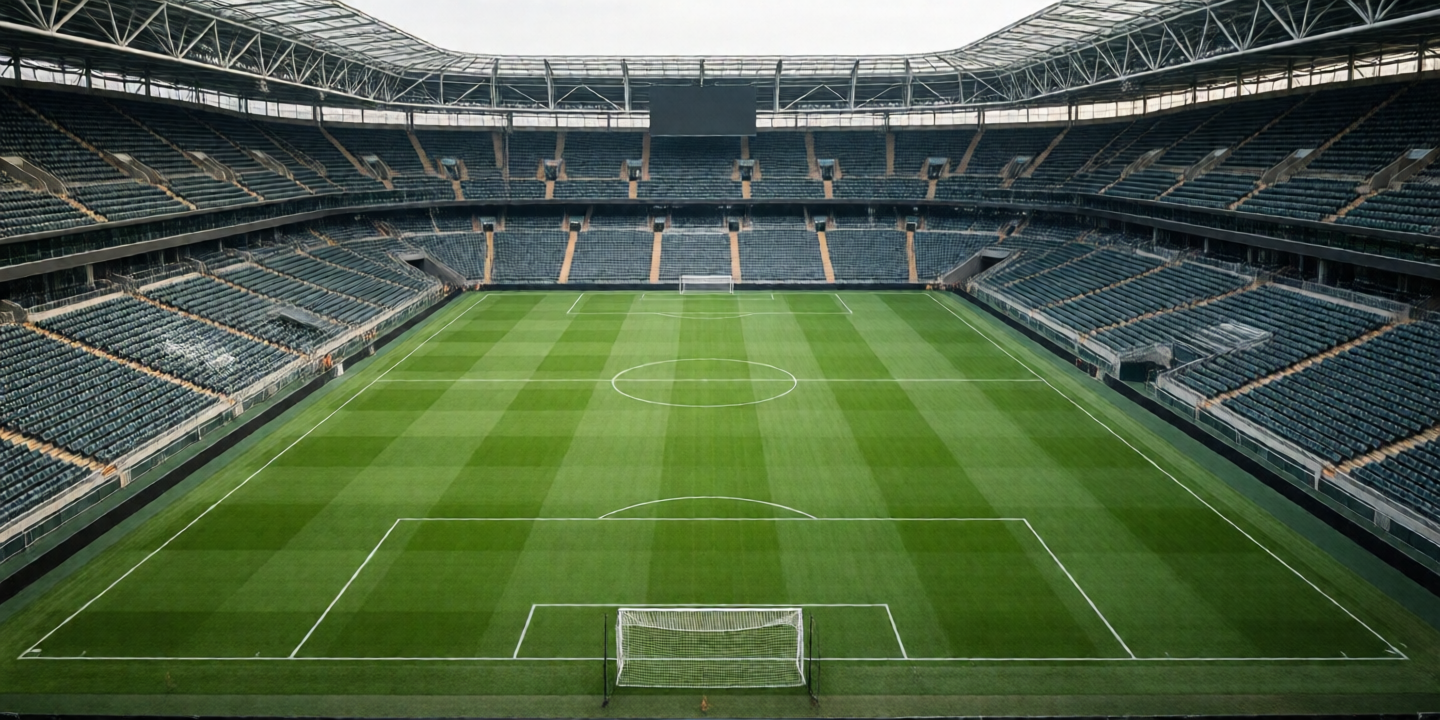
Photo by Jordan Jerome on Pexels
A common mistake is to treat the Brazil national football team vs Haiti national football team standings as a historical head-to-head table. That is not what supporters need after this match. The relevant question is how the 3-0 result affected the live 2026 FIFA World Cup Group C standings, Brazil’s route to the knockout phase, and Haiti’s tournament status. Match Daily follows those details alongside tactics, player statistics, predictions, and changing qualification probabilities.
Want the wider tournament context before judging the table?
Before 2025: how Brazil vs Haiti standings worked
Before the 2026 tournament, a Brazil-Haiti comparison was mainly a question of international stature, not a persistent competitive group-table rivalry. Brazil entered with the weight of five FIFA World Cup titles, while Haiti’s football identity was built through CONCACAF competition and a far less frequent presence at the global finals. Their standings were therefore usually discussed through FIFA ranking position, tournament qualification, and historical results rather than a shared World Cup group.
According to the FIFA World Cup archive, standings are determined first by points earned in the group phase: three for a win, one for a draw, and none for a defeat. Goal difference then becomes critical when teams are level, followed by goals scored and other competition-specific criteria. That framework explains why Brazil’s three-goal margin against Haiti mattered beyond the headline result. It increased Brazil’s points total and created a stronger numerical platform if Morocco or Scotland later matched Brazil’s points.
The historical imbalance also shaped pre-match expectations. Brazil possessed established stars such as Vinícius Júnior, Raphinha, Lucas Paquetá, and Matheus Cunha, while Haiti’s challenge depended more heavily on collective discipline, transition speed, and defensive resistance. Yet football has humbled me often enough to distrust reputation alone. A famous shirt does not receive automatic points; the match still has to be played, and the table still has to be calculated.
The useful pre-2025 comparison is this:
- Brazil traditionally operated among the tournament favourites.
- Haiti’s route depended on qualification breakthroughs and squad organisation.
- A shared standings table became meaningful only once both teams entered Group C.
- Goal difference could become decisive because Brazil and Morocco were separated by narrow margins after two matchdays.
For a deeper statistical baseline, readers can consult the FIFA ranking methodology, while Match Daily adds match-level context rather than treating rankings as predictions.
How did the 2026 shift change the Brazil national football team vs Haiti national football team standings?
The 2026 shift was Brazil’s 3-0 Group C win over Haiti on June 19, which gave Brazil four points from two games and confirmed Haiti as the first eliminated team. Brazil’s improvement from a 1-1 draw with Morocco was the central standings change, while Haiti’s second defeat removed its mathematical path to the knockout stage.
The table movement was straightforward but significant. Brazil earned three points, taking its total to four, while Haiti remained without a point after two matches. Morocco’s 1-0 victory over Scotland earlier on Friday meant Morocco also strengthened its challenge, making the final Group C fixtures highly consequential. Brazil sat at the top after the Haiti match, but first place was not the same as confirmed first place; Scotland and Morocco still had opportunities to alter the final order.
The New York Times analysis reported that Cunha’s brace and Vinícius Júnior’s goal settled the contest. That scoreline offered two separate gains:
- Brazil collected the maximum three points available.
- Brazil improved its goal difference by three, creating protection in a tie-break scenario.
- Haiti lost its remaining qualification route after its second defeat.
- The final Scotland match became a chance for Brazil to secure, improve, or complicate its position depending on the result.
Here is the contrarian detail many quick standings pages miss: Haiti’s elimination was not simply a consequence of losing to Brazil. It reflected the combination of Haiti’s two defeats, the remaining number of available points, and the positions of Morocco and Scotland. In group football, one result is often only the visible surface; the arithmetic underneath delivers the verdict.
See the match numbers and qualification logic in one place.

What changed for players after Brazil’s 3-0 win?
Brazil’s win changed the player conversation as much as the standings, because Raphinha left in the first half with what appeared to be a hamstring injury and Neymar was nearing a possible return from a calf problem. Matheus Cunha’s two goals strengthened his attacking case, while Vinícius Júnior demonstrated the decisive wide threat Brazil needed after the Morocco draw.
Carlo Ancelotti’s selection problem is therefore not merely about choosing the strongest names. It is about preserving balance after a convincing result while replacing or protecting players whose physical condition is uncertain. Raphinha’s withdrawal around the 40-minute mark matters because Brazil’s right-sided pressing, ball progression, and final-third combinations can change dramatically without him. The FIFA Laws of the Game do not determine squad selection, of course, but tournament football’s limited recovery windows make availability data every bit as important as tactical preference.
Ancelotti offered optimism about Neymar’s schedule, indicating that the 34-year-old would train individually before joining the group and could be available for Scotland on June 24. That possibility creates a strange tension: Brazil may have secured a valuable result without Neymar, yet his return could add creativity while also forcing a change to a functioning attack. I have seen teams ruin their own momentum by confusing star power with automatic chemistry. Isn’t the point of a squad to expand options, not to erase what just worked?
Player-level consequences include:
- Cunha gained confidence and stronger evidence for continued selection.
- Vinícius Júnior remained Brazil’s most dangerous open-field outlet.
- Raphinha’s medical assessment became a standings issue indirectly, because Brazil’s final placement depends on future performances.
- Neymar’s return could increase chance creation but alter pressing intensity.
- Haiti must now assess development value rather than qualification mathematics.
Match Daily’s Brazil player statistics and injury report can sit alongside the standings, because points without availability context rarely explain what comes next.
What does the result mean now?
The result means Brazil controls a strong position in Group C but has not automatically won the group, while Haiti can no longer qualify for the knockout phase. Brazil’s four points after two matches give it a clear platform, but the Scotland fixture on June 24 remains important for seeding, confidence, and avoiding an unnecessarily tense finish.
The immediate table reading should separate confirmed facts from live scenarios. Confirmed facts include Brazil’s four points, Haiti’s second defeat, Brazil’s 3-0 scoreline, Morocco’s 1-0 win over Scotland, and Haiti’s elimination. The unresolved issues include Brazil’s final ranking, the precise value of its goal difference against later results, and whether Neymar or Raphinha will be available.
A professional standings assessment should track at least five variables:
- Points after each matchday.
- Goal difference and goals scored.
- Results in the remaining Brazil, Morocco, and Scotland fixtures.
- Player availability, especially Raphinha and Neymar.
- Tournament tie-break rules published for the 2026 FIFA World Cup.
The practical lesson is brutal but useful. Brazil can be encouraged by the performance, but the 3-0 win does not justify assuming a flawless title challenge. The Morocco draw exposed unfinished attacking and control issues, while Haiti’s lower resistance made the second match an imperfect test of Brazil’s ceiling. Data shows improvement, not perfection. For bettors and analysts, that distinction matters: a strong standings position may reduce qualification risk without proving that Brazil should be priced as an unbeatable tournament favourite.

Want a disciplined way to compare form, injuries, and group-table scenarios?
What are three predictions for next quarter?
The next quarter of Brazil-Haiti standings analysis is best understood through three predictions: Brazil should reach the knockout phase, Haiti will shift toward evaluation and rebuilding, and Brazil’s final position will depend heavily on the Scotland match and goal difference. These are evidence-based expectations, not guarantees, because Morocco and Scotland still influence the Group C arithmetic.
Prediction 1: Brazil qualifies from Group C
Brazil’s four points and positive three-goal result make qualification the most likely outcome. A win against Scotland would remove much of the remaining pressure, while a draw could still be sufficient depending on Morocco’s result and the tie-break structure. A defeat, however, would reopen the table and expose the cost of Brazil’s earlier draw with Morocco.
Prediction 2: Haiti prioritises development
Haiti’s elimination means its final fixture cannot change its knockout status, but it can still shape public perception and player evaluation. Coaches may examine defensive spacing, pressing triggers, and the ability to survive long periods without possession. A competitive final performance could matter for future CONCACAF confidence even without points in Group C.
Prediction 3: Brazil’s injury report becomes a forecasting variable
If Raphinha misses Scotland, Brazil’s attack may become more dependent on Vinícius Júnior’s carries and Cunha’s penalty-area movement. If Neymar returns, Ancelotti must decide whether the creative gain outweighs reduced continuity. After years of watching promising teams collapse under forced changes, I would value verified training information over dramatic rumours every single time.
For ongoing predictions, consult Match Daily’s 2026 World Cup group-stage forecast and compare the model with confirmed line-ups before making any decision. Responsible analysis should never become reckless wagering; set limits, verify markets, and remember that even a 3-0 scoreline cannot remove football’s uncertainty.
Brazil national football team vs Haiti national football team standings: key summary
Brazil’s 3-0 win over Haiti placed Brazil on four points after two Group C matches and eliminated Haiti after its second loss. Cunha’s two goals and Vinícius Júnior’s strike delivered the scoreline, while Morocco’s 1-0 win over Scotland kept the group competitive. The most important unresolved variables are Brazil’s final match against Scotland, goal difference, and the fitness of Raphinha and Neymar.
The deeper finding is that standings and performance are related but not identical. Brazil’s table position improved sharply, yet the 1-1 draw with Morocco and Raphinha’s injury underline why supporters should evaluate opponent strength, tactical control, and squad availability together. Match Daily will continue tracking the 2026 FIFA World Cup with data-led previews, player statistics, and qualification scenarios rather than empty certainty.
Ready to follow the next Group C development?
Frequently Asked Questions
Q: What do the Brazil national football team vs Haiti national football team standings show?
A: They show Brazil on four points after two Group C matches and Haiti eliminated after two defeats. Brazil drew 1-1 with Morocco before beating Haiti 3-0 on June 19, 2026. Matheus Cunha scored twice and Vinícius Júnior scored once. Haiti’s remaining match cannot restore its mathematical path to the knockout phase, while Brazil remains focused on its final fixture against Scotland.
Q: How did Brazil reach four points in Group C?
A: Brazil reached four points by drawing 1-1 with Morocco and defeating Haiti 3-0. The draw supplied one point, and the Haiti victory supplied three, producing a total of four from two matches. The three-goal margin also improved Brazil’s goal difference, which may matter if Brazil, Morocco, or Scotland finish level on points.
Q: What is the difference between Brazil’s standing and Haiti’s standing?
A: Brazil remained in contention for first place and knockout qualification, while Haiti was eliminated from the 2026 World Cup. Brazil’s four points and positive goal difference gave it a strong platform before playing Scotland. Haiti’s second defeat left no remaining combination of results capable of sending it into the next round.
Q: Why doesn’t the Brazil-Haiti standings page show the full qualification picture?
A: A standings table may show points and goal difference without explaining remaining fixtures, tie-breakers, or injury effects. Brazil’s position also depends on Scotland and Morocco results, not only the Brazil-Haiti score. Check the official FIFA World Cup competition information and confirm the latest Group C fixtures before interpreting a live table.
Q: Is Brazil’s 3-0 win enough to guarantee first place?
A: No, Brazil’s 3-0 win does not by itself guarantee first place in Group C. Brazil had four points after two games, but Morocco and Scotland could still influence the final order through their remaining results. Brazil would strengthen its claim significantly by avoiding defeat against Scotland and preserving its goal-difference advantage.
Q: What should I check before analysing Brazil’s next standings scenario?
A: Check the confirmed Group C points, goal difference, remaining fixtures, and official injury updates before forming a prediction. Raphinha’s apparent hamstring problem and Neymar’s possible return could change Brazil’s attacking structure against Scotland. Also compare the latest line-up information with reputable sources, then apply a fixed budget and responsible limits if your analysis informs wagering.
Q: Where can I follow Brazil and Haiti World Cup updates?
A: Match Daily provides ongoing 2026 World Cup coverage covering standings, predictions, tactics, and player statistics. The official FIFA tournament pages remain the primary source for fixtures and confirmed competition information, while reputable reporting can add injury and squad context. Use the World Cup standings and match-centre guide to cross-check Group C developments after each matchday.
Thank you for reading this piece from our digital heirloom collection.
Match Daily · The Digital Heirloom · Volume I